Hand a phone to a four-year-old and watch what happens. Within thirty seconds they are either in a YouTube rabbit hole, stuck on an app that wants an email before it shows a single letter, or staring at a banner ad for something no child should see.
Parents in India know this dance well. You want five quiet minutes. You also want the child to learn something — colours, counting, a few Hindi letters — not scroll through random cartoons until someone starts crying. The tools we give them rarely respect that balance.
That gap is why we built KidHub. Not as a pitch deck idea. As a small, free product we wanted to exist.
The Problem Was Not “More Content”
Open any kids learning app store listing and you will see the same promises: “fun,” “educational,” “ages 2–6.” Then you install it and hit a wall.
- Create an account before the first activity.
- Ads between every two screens.
- In-app purchases for basic alphabet practice.
- English-only content in homes where Hindi is the first language spoken.
- Progress locked to a cloud login the child will never remember.
Families do not need another subscription layered on top of school fees, tuition, and the rest. They need a quiet place where a child can tap colours, hear a story, or practise counting — without an adult standing behind them to dismiss pop-ups.
What KidHub Actually Is
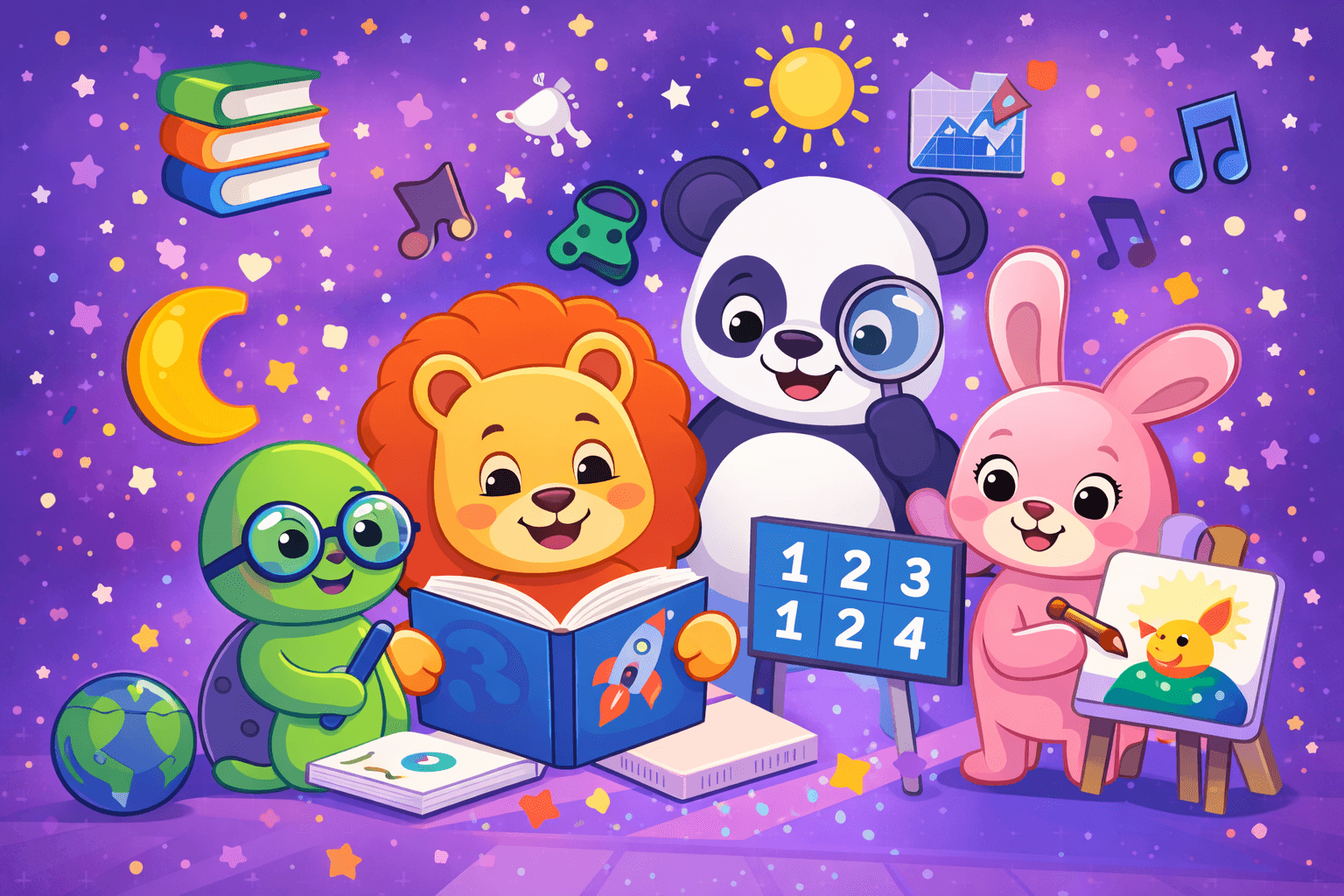
KidHub is a learn-and-play website for children roughly aged 2 to 6. Colours, alphabet, numbers, Hindi, stories, drawing, and simple games — in a cheerful space that does not try to monetise the child’s attention.
A few decisions we refused to compromise on:
Free, for every child. No freemium trap. No “unlock Level 3 for ₹199.” If early learning is going to be a public Codextroop product, it stays open.
No ads. Ads and toddlers do not mix. Full stop.
No account required to start. Open the site, pick an activity, play. Progress stays in the browser on that device. That is intentional. A two-year-old should not need a password.
English and Hindi. Plenty of apps assume every Indian home is English-first. Many are not. KidHub treats Hindi as a first-class path, not an afterthought label.
Built in Lucknow, for Real Homes
We are Codextroop Technologies, based in Lucknow. Most of our day job is client software — SaaS, web apps, mobile, AI integrations. KidHub sits in a different bucket: products we ship ourselves and keep improving.
I will be honest. We did not start with a big education research paper. We started with a simple question we kept asking around the table: if my own nephew or cousin’s kid opens this on a phone, will I feel okay leaving the room for ten minutes?
That bar is higher than “looks cute in a screenshot.” It forced us to strip the noise — no dark patterns, no engagement tricks, no fake urgency. Just activities that make sense for small hands and short attention spans.
Learn by Playing, Not by Lecturing
At this age, kids do not sit through a syllabus. They poke, listen, repeat, get bored, come back. So KidHub is organised around short activities: tap the red circle, match a letter, hear a story, scribble something silly, play a light game, try a Hindi sound.
Parents sometimes ask whether this “replaces” preschool or worksheets. It does not. It is a safe gap-filler for those pockets of the day — after lunch, before guests arrive, on a rainy Sunday — when a tablet is going to come out anyway. Better that time goes somewhere calm than somewhere chaotic.
Kid-Safe Is a Design Choice, Not a Marketing Line
“Kid-safe” gets printed on a lot of packaging. In practice it means different things. For us it meant:
- No third-party ad networks sitting next to a colouring page.
- No forced social features.
- No account wall that quietly becomes a marketing database.
- Progress local to the device, so the product does not depend on collecting a child’s data to “personalise.”
Is the product finished forever? No. Like our other public products, KidHub is in continuous development — we keep unifying content, fixing rough edges, and adding activities. But the principles above are not on the chopping block for growth hacks.
How to Try It
Open kidhub.codextroop.com on a phone or tablet. Start exploring, or jump into games. No install required beyond a browser. No “sign up to continue.”
If you are a parent, aunt, uncle, or teacher looking for five calm minutes that still feel useful — try one activity with the child beside you first. Show them colours or numbers once. Then see if they can find their way without you tapping for them. That small independence is usually the moment it clicks.
We built KidHub because the default options for little kids felt noisy, pushy, or incomplete for Indian homes. If it helps even a few families keep learning lighter and safer, the product has done its job.
Questions or feedback? Write to us at [email protected]. We read those mails.