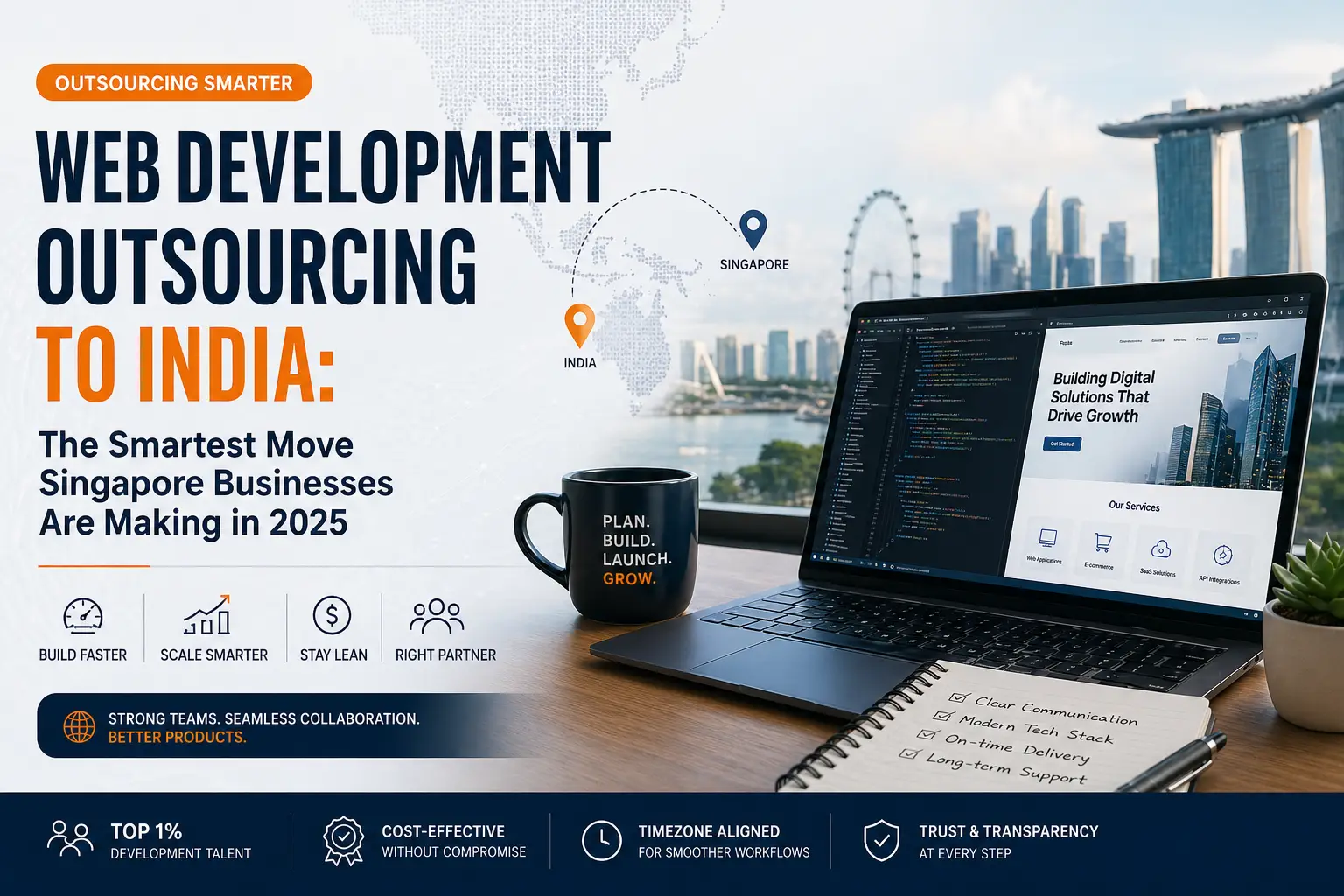
Why Singapore Companies Are Outsourcing Web Development And Not Regretting It
Let me be upfront. If you are a Singapore-based business looking to build a website, a web application, or a full product, you have already done the math. Local developers are expensive. Not because they are not worth it. But because Singapore's cost of living is one of the highest in Asia, and that gets baked into every invoice you receive.
So when companies start looking at outsourcing to India, the question is rarely should we. It is usually how do we do this without losing quality or control.
That is exactly what this guide answers.
What "Web Development Outsourcing" Actually Means
The word outsourcing gets misused constantly. Let us be specific about what it means here.
When a Singapore company outsources web development to an Indian firm like Codextroop, they are not handing over a vague brief and hoping for the best. A good outsourcing engagement looks like this:
- You describe the business problem or the product you want to build
- The development partner scopes it, breaks it into milestones, and proposes a tech stack
- Development happens with regular check-ins, demos, and feedback loops
- You get a production-ready product, not a prototype that needs fixing
The best outsourcing setups feel less like delegation and more like having a remote engineering team that happens to sit in a different timezone.
What Singapore Businesses Are Actually Building
In case you are wondering what kinds of projects are commonly outsourced here is what we see most often from Singapore and Malaysia clients:
- Corporate websites and landing pages (Next.js, React, WordPress)
- E-commerce platforms (Shopify, custom-built with Stripe or Razorpay)
- Internal dashboards and admin tools
- SaaS MVPs, founders who want to validate fast without hiring a full team
- Mobile-first web applications for logistics, F&B, and HR workflows
- API integrations between tools like Xero, Salesforce, WhatsApp Business, and internal systems
The variety is wide. The common thread is always the same: they need something built well, delivered on time, and maintained properly after launch.
The Real Reason Cost Alone Is Not Enough to Decide
Yes, development rates in India are significantly lower than in Singapore. A senior developer in India might cost 30–50% of what you would pay locally for equivalent skill.
But cost cannot be the only filter. Here is what actually separates good outsourcing from bad:
- Communication quality: Does the team explain what they are building and why, or do they just send code and wait for feedback?
- Tech stack decisions: Are they building with modern tools (Next.js, Node.js, PostgreSQL, Tailwind) or are they defaulting to what they already know without thinking about your long-term needs?
- Ownership of the codebase: Will you have full access to the repository from day one?
- Post-launch support: What happens after delivery? Is there a maintenance plan?
These are the things you should ask before signing anything. Any credible development partner will answer these without hesitation.
The Tech Stack We Use for Singapore Clients
This is not a brochure section. Here is what we actually build with and why each choice matters:
- Next.js: For web applications that need SEO, fast load times, and the flexibility of both static and server-rendered pages. Most Singapore clients care about Google rankings. Next.js handles that well out of the box.
- Node.js / Express or NestJS: For backend APIs. Consistent language across the stack means faster development and fewer context switches.
- PostgreSQL + Prisma: Relational data, proper migrations, and a clean ORM that makes database work less error-prone.
- Tailwind CSS: We do not fight with CSS. Tailwind keeps the frontend predictable.
- Vercel / AWS / DigitalOcean: Depending on the project's complexity and budget. Vercel is our default for Next.js projects. AWS for anything that needs more control.
How Timezone Works in Practice
Singapore is GMT+8. India is GMT+5:30. That is a 2.5-hour difference, the smallest gap you will find between Singapore and any outsourcing destination globally.
What this means practically:
- Morning standups work. No one is staying up till midnight.
- If you send feedback at 5 PM Singapore time, your team reads it by 7:30 PM IST and responds same day.
- Urgent bug? You are not waiting for a different continent to wake up.
This is a genuine advantage that does not get talked about enough. India is the closest outsourcing option to Singapore, culturally and timezone-wise.
How We Handle Projects: The Actual Process
Here is how a typical engagement looks from inquiry to launch:
- Discovery call (30–45 minutes): We understand what you are building, your timeline, and what success looks like. No NDAs required upfront. Just an honest conversation.
- Proposal and scope document: We send a written breakdown within 48 hours. It includes milestones, deliverables, tech choices, and a timeline. Nothing vague.
- Milestone-based development: We do not bill everything upfront. Work is broken into phases so you can review and approve at each stage.
- Weekly demos and Slack/WhatsApp access: You see progress every week. You can ask questions in between. We prefer over-communication to silence.
- Deployment and handover: You own the code, the domain, the hosting account. We document everything and hand it over cleanly.
What to Watch Out For When Outsourcing
Not every outsourcing experience is a good one. Here are the warning signs to avoid:
- Teams that ask for full payment upfront with no milestone structure
- No clear point of contact, you are talking to three different people on three different days
- Vague timelines like "4–6 weeks" with no breakdown of what happens in those weeks
- Repos that are locked or code that is not handed over at the end
- Zero interest in understanding your business, they just want the specs
If any of these show up in early conversations, treat it as a red flag and move on.
Why Codextroop Works Well for Singapore and Malaysia Clients
We operate with a focused and streamlined approach. We are a focused team that works with a limited number of clients at a time which means your project gets actual attention, not just a project manager relay.
Our work covers:
- Full-stack web development (frontend + backend + database)
- Mobile application development (React Native)
- SaaS product development from zero to launch
- Dedicated developer hiring for ongoing teams
- API development and third-party integrations
We have worked with founders, product managers, and business owners across Singapore and Malaysia who needed a reliable technical partner, not just a vendor.
What to Prepare Before Reaching Out
You do not need a full spec document to start the conversation. But having these things ready makes the first call much more productive:
- A rough description of what you want to build (even a paragraph is fine)
- Your rough timeline is this urgent or exploratory?
- Any existing designs, wireframes, or references you have
- Your approximate budget range you do not need to be exact
We will take it from there.
Final Thoughts
Outsourcing web development to India is not about finding the cheapest option. It is about finding the right team at a price point that lets your business move faster without sacrificing quality.
Singapore companies that do this well treat their Indian development partner the same way they would treat an internal team with clear communication, reasonable timelines, and mutual respect.
The timezone advantage, the technical depth available in the Indian developer pool, and the cost difference make this one of the most practical decisions a growing Singapore business can make.
If you are ready to explore this seriously, reach out to the Codextroop team and let us have an honest conversation about what you are building.